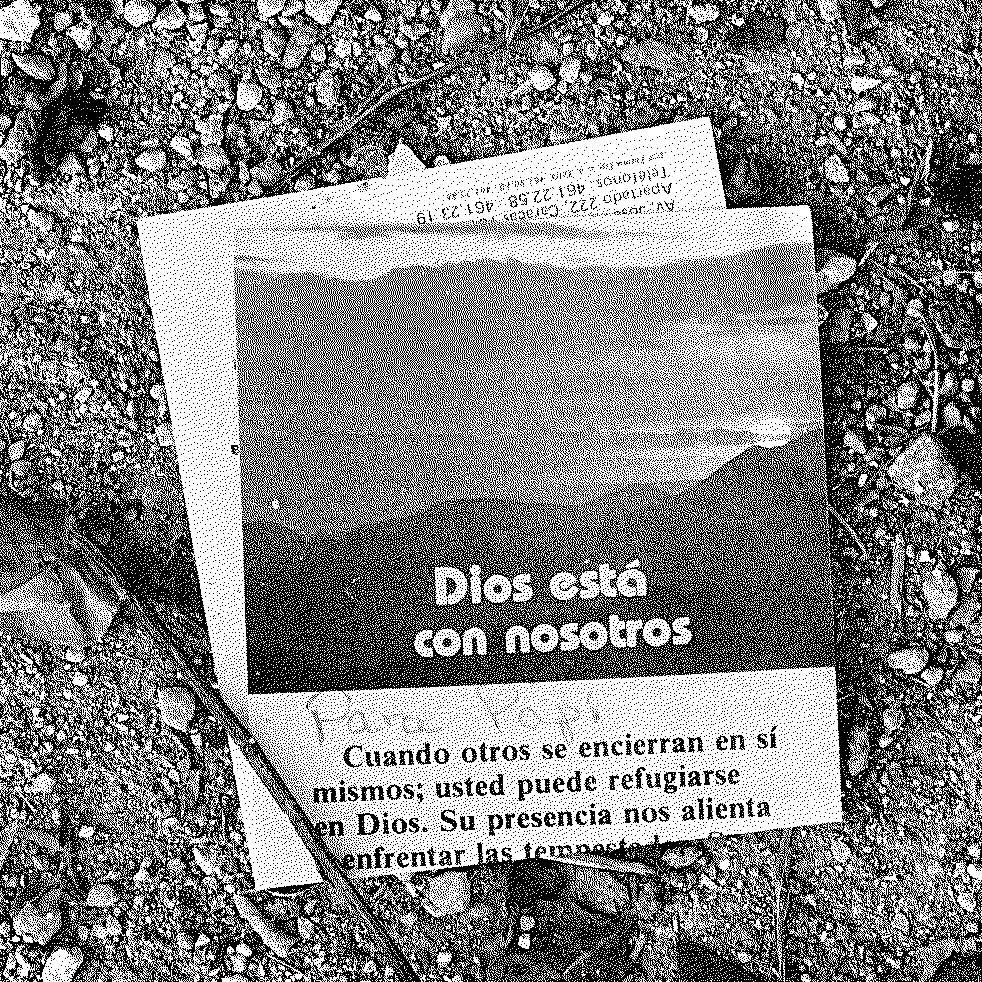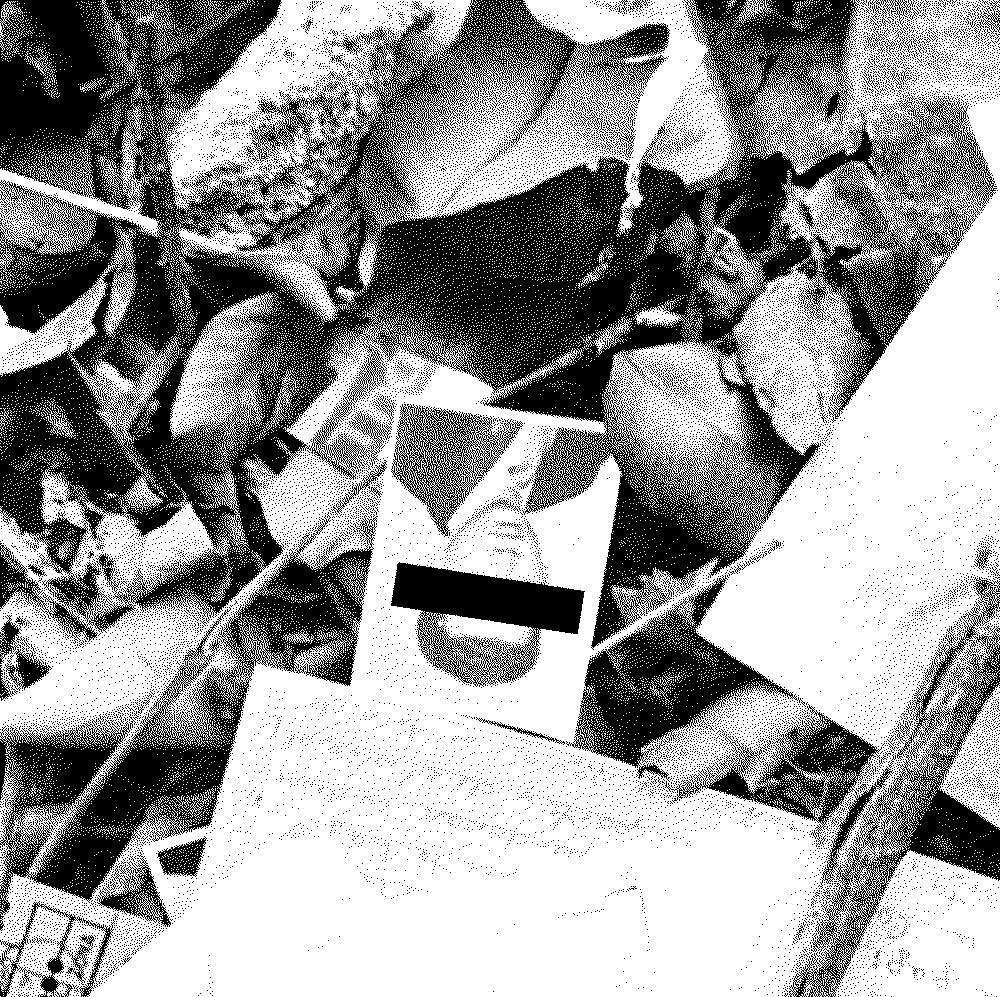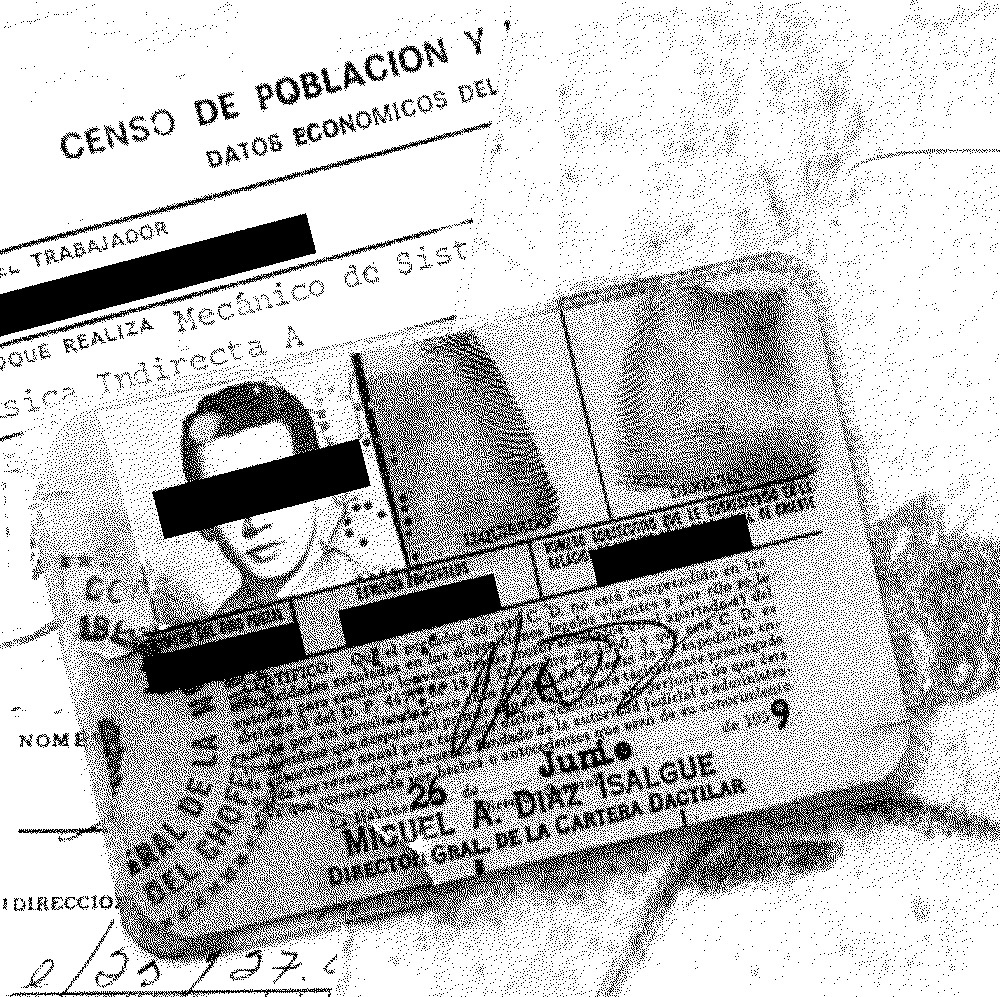
On a street outside Cementerio Cristóbal Colón in Havana, in January 2022, someone left a life on the pavement: identification cards, church letters, baby photographs and later ones, postcards from Palestine, and, pressed to official paper, the fingerprints of a man whose full name this book knows, yet withholds.

Site-specific documentation, Havana, 2023.

Presented as a hybrid publication — a critical essay in seven movements and a sprawling poetry collection — this text asks what the encounter with this pile created, and what it continues to demand. What does it mean to photograph a stranger’s scattered archive? What does the shutter create in the way of ongoing civic obligation? What can a witness who occupies the seeing-man’s position within the colonial geography of the contact zone honestly claim to owe — and to whom?
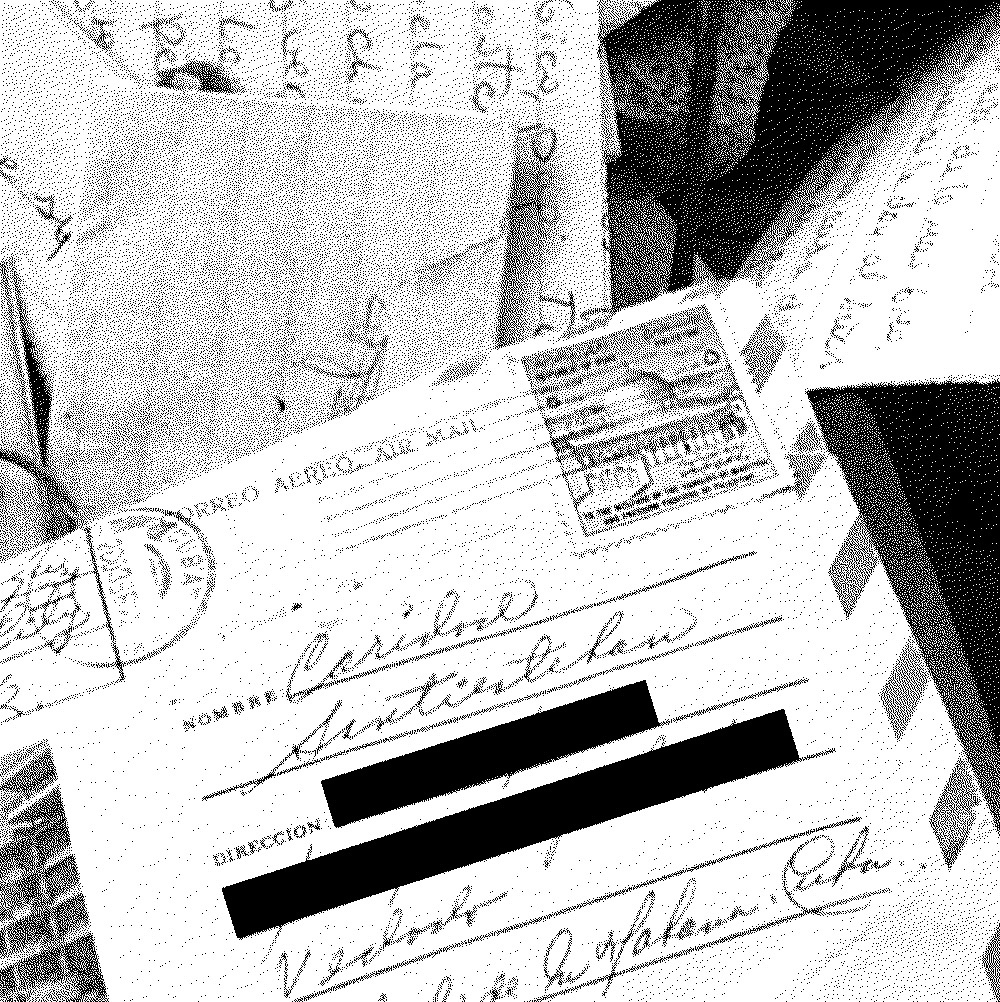
Site-specific documentation, Havana, 2023.

The essay moves through the theoretical traditions most capable of holding the encounter’s complexity without flattening it. Achille Mbembe’s necropolitics and Judith Butler’s account of grievable life illuminate the structural conditions that produce an archive without a keeper; Ariella Azoulay’s civil contract of photography names what the camera creates in the way of civic obligation; Saidiya Hartman’s critical fabulation models how to write near a life that cannot be fully known without claiming to have entered it; Édouard Glissant’s opacity insists on the man’s right to remain, in some essential dimension, irreducible to the essay’s account. Mary Louise Pratt, Sylvia Wynter, and Avery Gordon complete the theoretical scaffolding — each a different way of insisting that what was on the pavement is not simply a moving scene but a structural fact, and that the encounter with it carries responsibilities that grief and good intentions do not discharge.

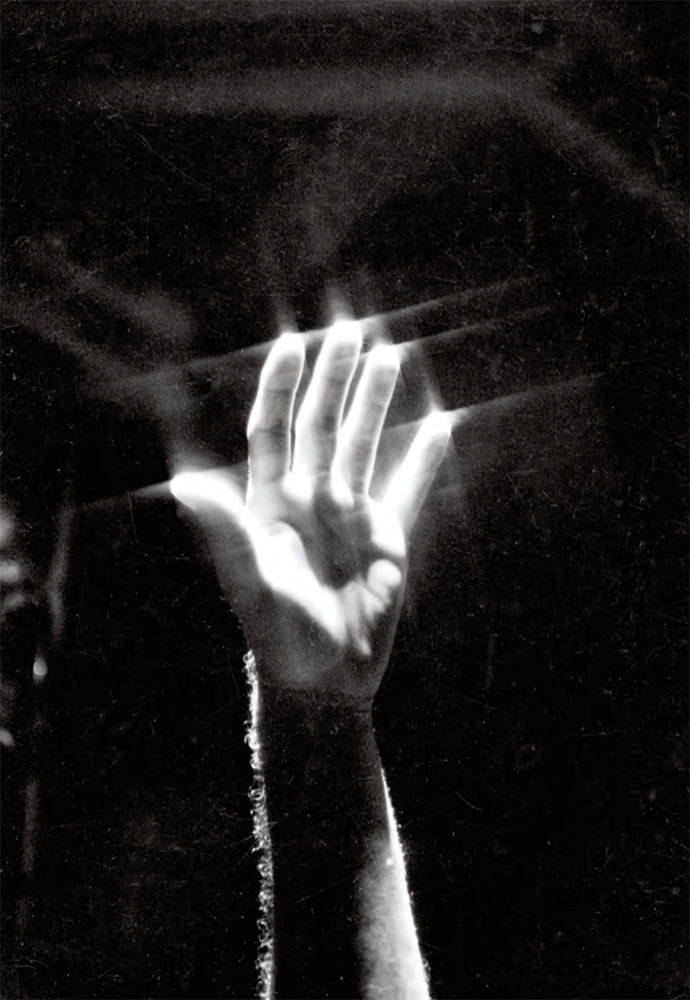
Site-specific documentation, Havana, 2023.

The poetry does not illustrate the essay. It stays inside the encounter — in the heat of the pavement, the shame before the grief, the camera already moving before the ethics caught up — refusing the retrospective knowledge the essay’s analytical distance can afford. Together they constitute what Ann Cvetkovich calls a minor archive of feeling: a record that the encounter happened, that it mattered, and that the obligation it created has not yet been met.

The Man Whose Name I Know: Encounter and The Responsibility of Witness is a work of decolonial criticism and lyrical mourning. Rather than resolving the question it poses, it argues that the asking itself constitutes the necessary labor of ethical encounter.

Type:
Autotheoretical Text
Year:
2026 (Forthcoming)
Location:
Havana, Cuba
Citation: Beck, Maegan. "To the Man Whose Name I Know: Encounter and the Responsibility of Witness." Forthcoming, 2026.
To the Man Whose Name I Know: Encounter and the Responsibility of Witness Site-specific documentation, Havana, 2023.

"To the Man Whose Name I Know: Encounter and the Responsibility of Witness"

Next Text
The Score No One Else Can Perform: Nicole Ji Soo Kim and the Notation of Mourning

"The Score No One Else Can Perform: Nicole Ji Soo Kim and the Notation of Mourning"

ESPACE art actuel 2026 (Forthcoming)